JR Central · JR West

Japan's fastest bullet train — 300 km/h, Tokyo to Osaka

The Nozomi Shinkansen skips the smaller stops on the Tokaido and Sanyo lines, cutting real time off every ride between Tokyo, Nagoya, Kyoto, Osaka and Hiroshima. Search live fares and reserve your seat below.

300 km/hTop speed, Sanyo Shinkansen
Since 1992First Nozomi service, 14 March
~12 / hourPeak departures from Tokyo
Interior of a Nozomi Shinkansen Standard Car
Tokyo Station, platform 14

The train you're boarding

Nozomi is the fastest train service on the Tokaido and Sanyo Shinkansen. Every Nozomi train runs the N700A or N700S trainset — the newest generation of Shinkansen bullet trains — operated as one continuous through service by JR Central (the Central Japan Railway Company) on the Tokaido Shinkansen and JR West on the Sanyo Shinkansen, in service since 14 March 1992.

OperatorJR Central · JR West
TrainsetN700A / N700S
Since14 Mar 1992
Which way to your seat?

Standard Car or Green Car

Every Nozomi train has both reserved and non-reserved seats in dedicated cars — Standard Car is listed as Ordinary Car on JR ticket machines. A reserved seat ticket lists your exact seat number and car, worth the seat reservation during rush hours, weekends and Japanese holidays; non-reserved seats cost less but are first-come, first-served at peak periods — car numbers can shift by train type, so check the platform boards at JR stations.

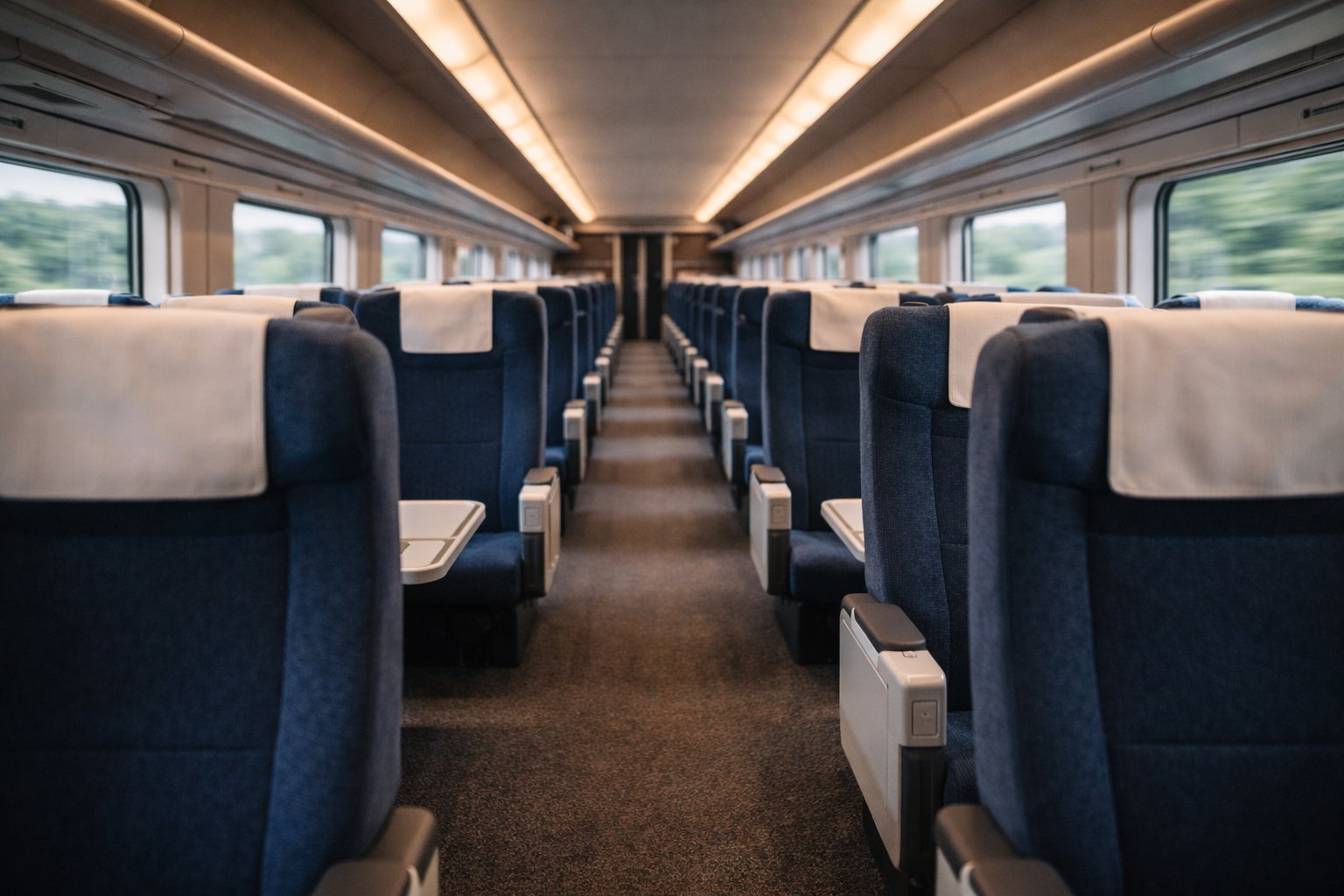
Standard reserved car seating on a Nozomi Shinkansen
Standard car

Standard Car

3-and-2 seating, a fold-down tray, a power outlet at every seat, and generous legroom — makes up most of every Nozomi trainset.

Book Standard Car ↗
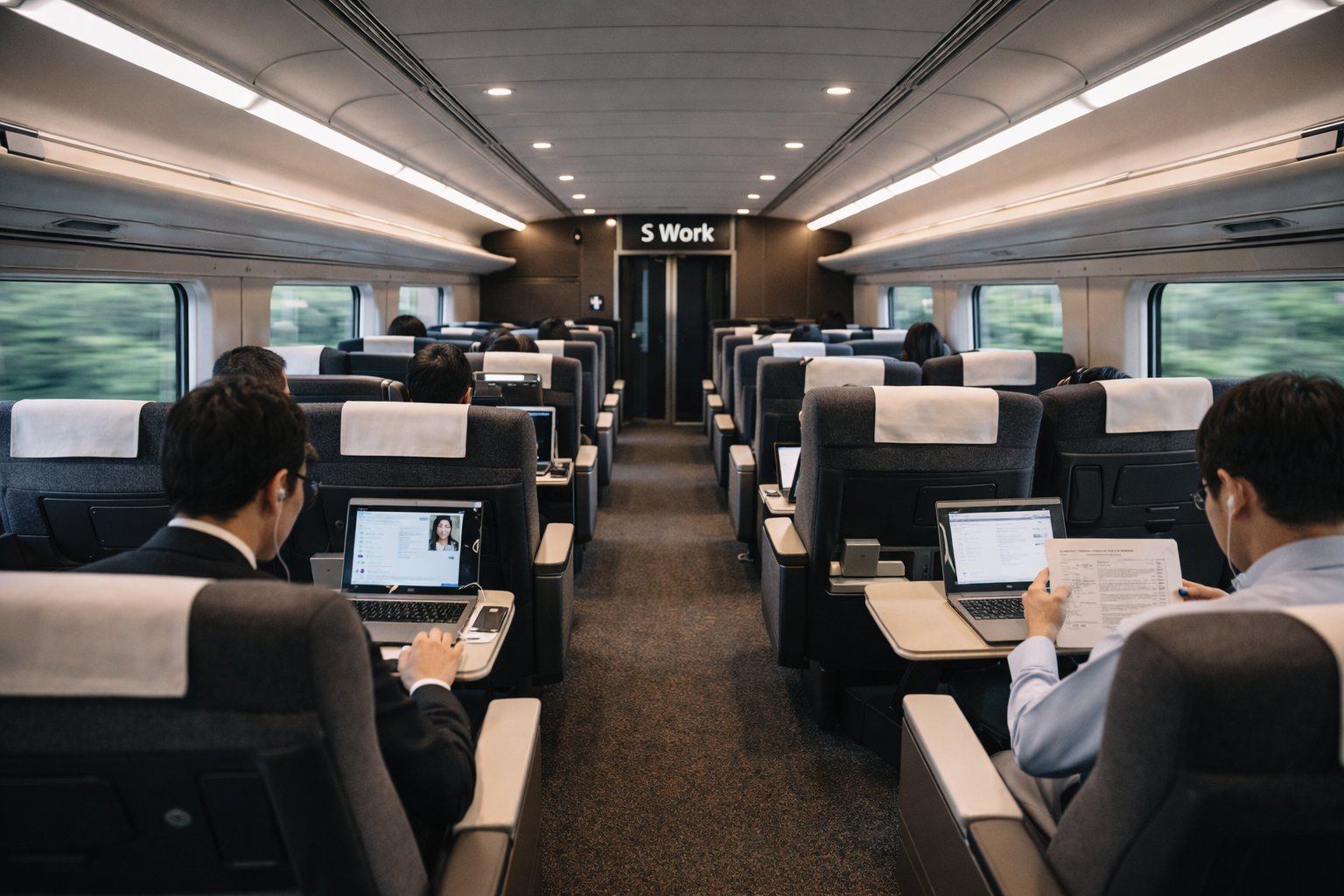
Green Car first class seating on a Nozomi Shinkansen
Green Car

Green Car (First Class)

Wider 2-and-2 seating, extra legroom, a quieter car and a dedicated attendant — Green Car has only reserved seats, no non-reserved option, costs more than an ordinary reserved seat, and still requires the Nozomi fare supplement for JR Pass holders.

Book Green Car ↗
Somewhere past Shinagawa

The stations that go by without stopping

Nozomi is the fastest, limited-stop Shinkansen service on the Tokaido and Sanyo lines — it skips the smaller stations that Hikari and Kodama still call at, cutting real time off the ride between Tokyo, Nagoya, Kyoto, Osaka and Hiroshima.

NOZOMI — major stations only HIKARI — adds mid-size stations, +20–30 min · JR Pass OK KODAMA — every station · JR Pass OK

Core major stations on the route: Tokyo, Shinagawa, Shin-Yokohama, Nagoya, Kyoto, Shin-Osaka, Shin-Kobe, Okayama, Hiroshima, Kokura and Hakata — exact stops vary by train, and a Nozomi ticket can't be used to board a Hikari or Kodama service on the same route, or the reverse. Hikari calls at additional stations along the way, and Kodama trains stop at every one of them.
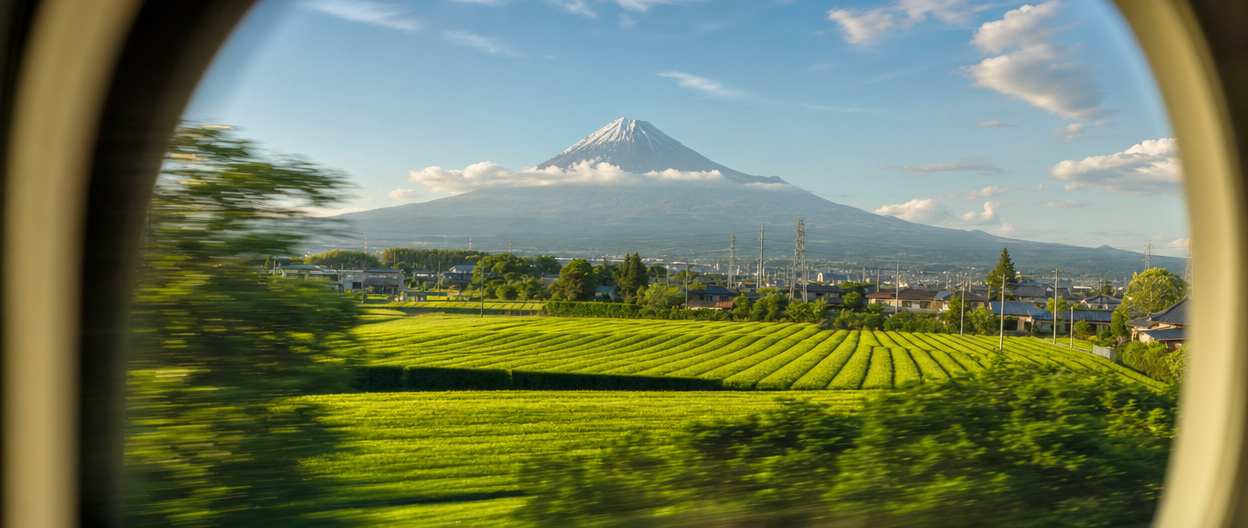
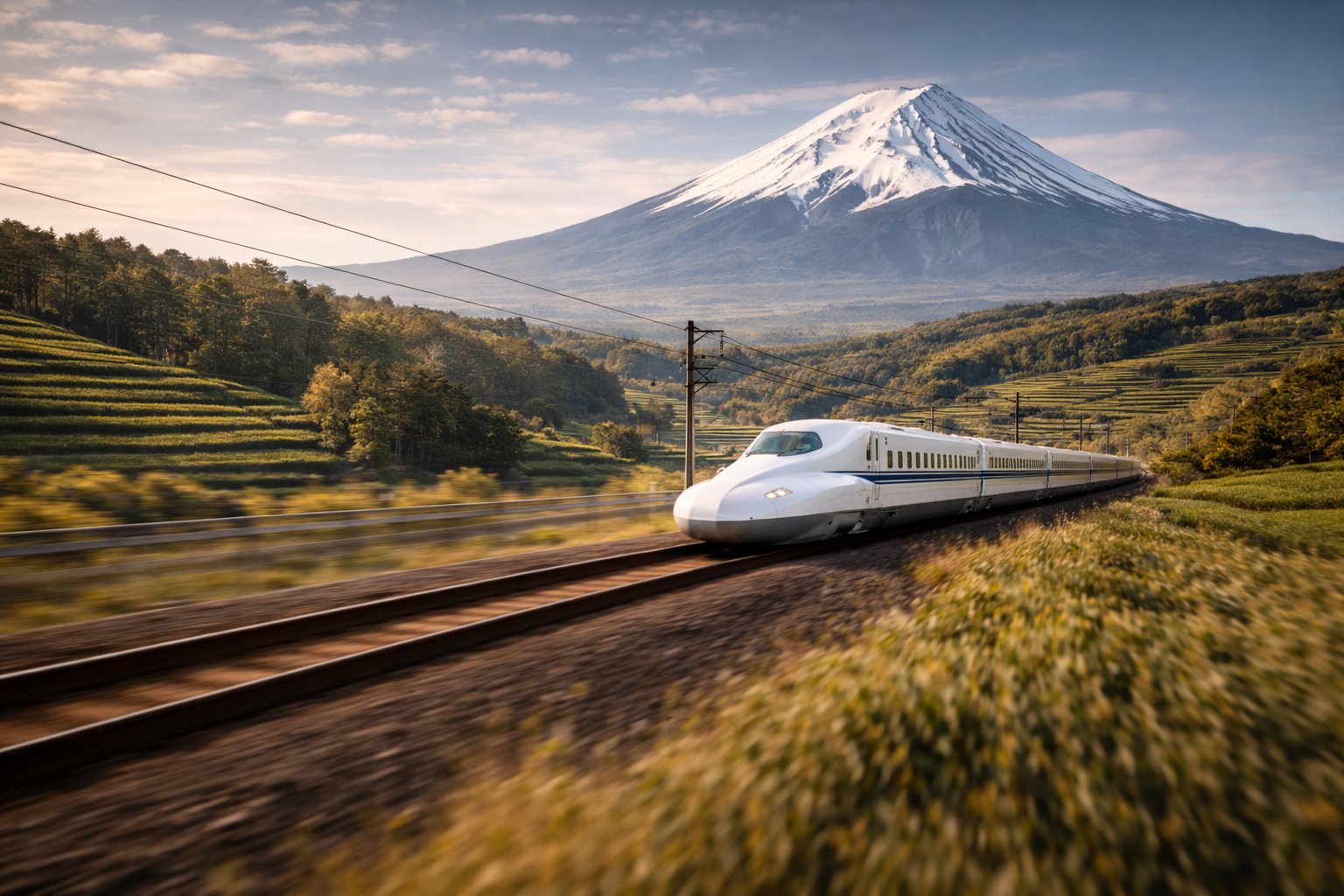
Somewhere near Mount Fuji
300 km/h

Top speed on sections of the Sanyo Shinkansen — also the highest average speed of the three Tokaido-Sanyo Shinkansen services, and the smoothest, quietest ride, with no train change needed between Tokyo and Hakata.

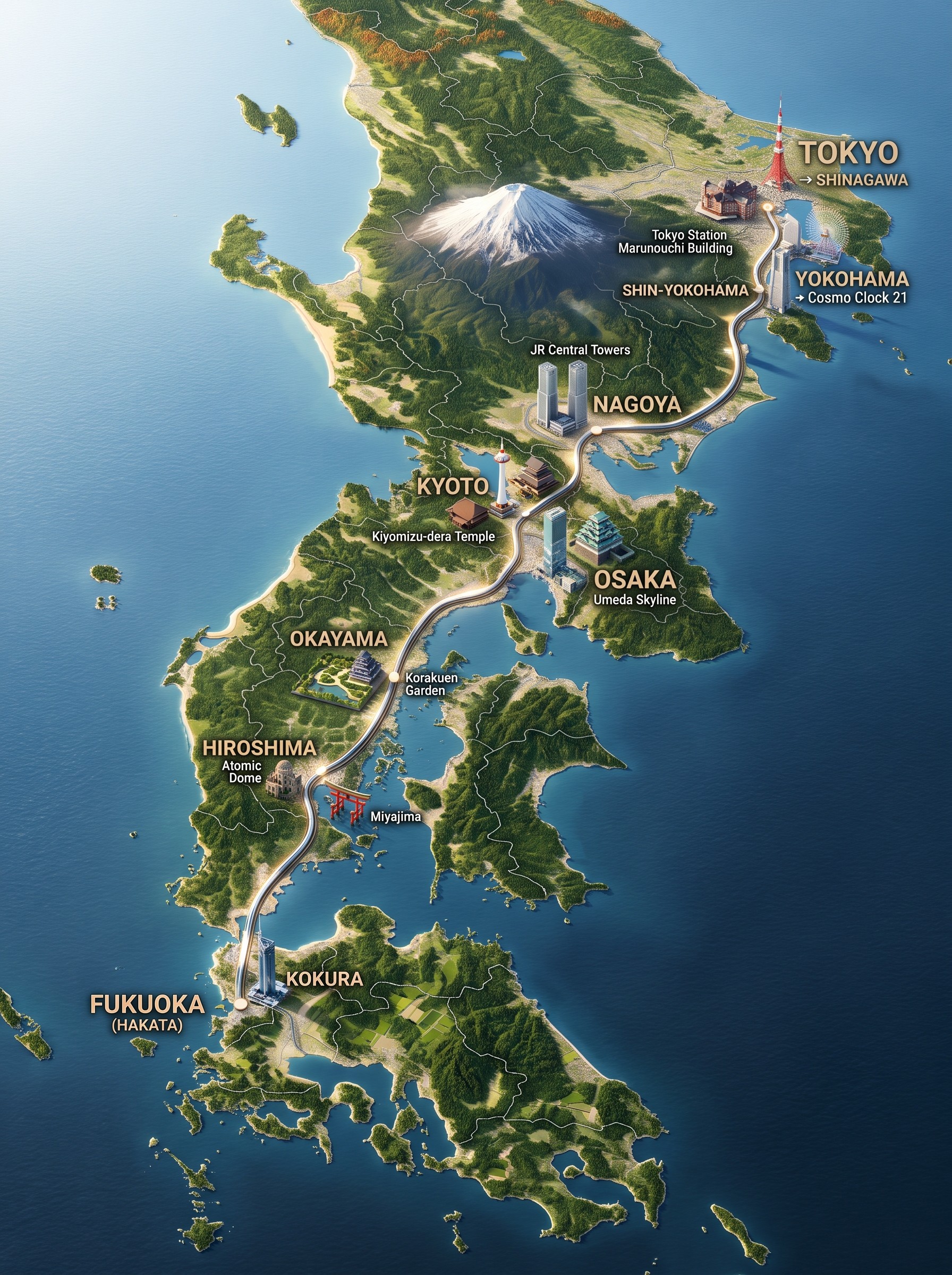
Route map

Tokaido–Sanyo Shinkansen, station by station

Nozomi runs the full line from Tokyo to Hakata, skipping the smaller stops that Hikari and Kodama still call at.

  • Tokyo
  • Shinagawa
  • Shin-Yokohama
  • Nagoya
  • Kyoto
  • Shin-Osaka
  • Shin-Kobe
  • Okayama
  • Hiroshima
  • Kokura
  • Hakata (Fukuoka)
Illustrated map of the Tokaido-Sanyo Shinkansen route from Tokyo to Hakata via Nagoya, Kyoto, Shin-Osaka and Hiroshima
Approaching Shin-Osaka

Nozomi, Mizuho and the Japan Rail Pass

The standard Japan Rail Pass doesn't cover Nozomi — or Mizuho, one of the fastest Kyushu Shinkansen trains, continuing on from Hakata toward Kagoshima. JR Pass holders can still board by paying the fare difference between the Nozomi ticket and the equivalent Hikari fare, at any JR ticket office or Midori no Madoguchi counter — a special ticket transaction, officially called a Nozomi Mizuho ticket, that JR staff handle routinely. Travelers who ride Nozomi often, instead of paying that supplement repeatedly, may find it cheaper to buy individual tickets directly rather than holding a Japan Rail Pass at all — it depends on how many rides are planned within the pass's one-month validity window.

Nozomi tickets can be bought at any JR ticket office, a Midori no Madoguchi counter, station ticket machines, travel agencies, or online in advance. Search the live schedule above and reserve a seat before you travel, checking the departure time and ticket rules for your fare type — booking ahead is especially worthwhile during Japanese holiday weeks, when reserved seats on the busiest services sell out days in advance.

FAQ

Frequently asked questions

Is the Nozomi train covered by the Japan Rail Pass?

No. The standard Japan Rail Pass does not cover Nozomi or Mizuho trains. JR Pass holders can still ride by paying the fare difference at a ticket office.

What is the top speed of the Nozomi Shinkansen?

Nozomi trains reach up to 285 km/h on the Tokaido Shinkansen and up to 300 km/h on sections of the Sanyo Shinkansen.

What's the difference between Nozomi, Hikari and Kodama?

Nozomi is the fastest, stopping only at major stations. Hikari makes more stops. Kodama stops at every station. Only Hikari and Kodama are covered by the Japan Rail Pass.

Do I need a reserved seat on the Nozomi train?

Not always — every Nozomi train has non-reserved cars — but a reserved seat ticket guarantees your seat number during rush hours, weekends and holidays.

Which stations does the Nozomi train stop at?

Major stations including Tokyo, Shinagawa, Shin-Yokohama, Nagoya, Kyoto, Shin-Osaka, Shin-Kobe, Okayama, Hiroshima, Kokura and Hakata, though the exact stops vary by train.

Who operates the Nozomi Shinkansen?

JR Central (the Central Japan Railway Company) operates the Tokaido Shinkansen section, and JR West operates the connecting Sanyo Shinkansen section, as one continuous Nozomi service.

Where can I buy a Nozomi train ticket?

At any JR ticket office, a Midori no Madoguchi counter, station ticket machines, travel agencies, or online in advance of your ride.

How often do Nozomi trains depart from Tokyo?

At peak periods, up to a dozen Nozomi trains depart Tokyo every hour — one of the most frequent high-speed train services anywhere, popular with business travelers who need a fast, frequent option without booking days ahead.

What is a Nozomi Mizuho ticket?

Since Nozomi and Mizuho aren't covered by the standard Japan Rail Pass, JR Pass holders who want to ride either service need what's officially called a Nozomi Mizuho ticket — a special ticket covering the fare difference, issued at any JR ticket office or Midori no Madoguchi counter.

Interior of a Nozomi Shinkansen Green Car
Shin-Osaka — journey's end

Ready to ride the Nozomi?

Search live Nozomi fares and reserve your seat in a few taps.

Book Nozomi tickets ↗